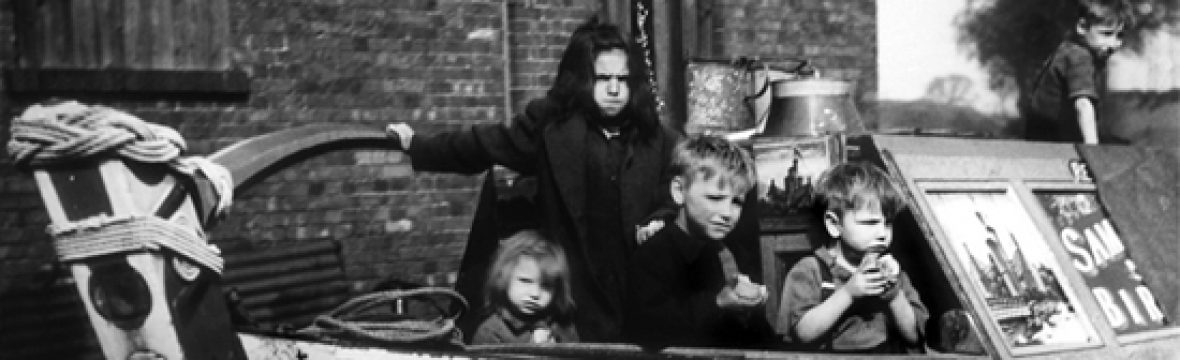

Image restoration is not so unlike the dedication required to dredge the canals of unwanted mud and debris; or narrowboats of their rust.
The restoration of the archive took many painstaking hours of removing thousands of tiny specs, blemishes and scratches from each image. During which I was aware I was beholding people – many long gone – who had conversed with and, when photographed, were peering at my ancestor.
I developed a greater appreciation for his talent of catching the moment and freezing the tension and poise of an arm as it works to manoeuvre a boat through a lock. Or his understated ability to subtly pose the people he knew in a complex composition; for deftly framing and cropping his results to the best advantage of nuances of light, shadow and facial expression.
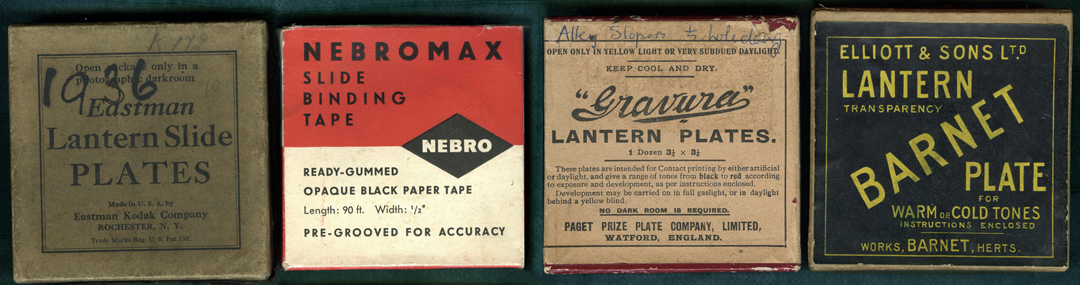
Very high-resolution scans were produced from the original 3-inch (76mm) glass positive plates. The resultant digital images had thousands of tiny specks, blemishes and stains digitally retouched from each image. These were tonally optimised and expertly printed onto archival Hahnemühle paper on a printer used by Magnum for their editions, and framed to museum standard. For the touring exhibition several images were as yet unpublished.
I discovered dabs of black enamel brushwork where Robert had blacked out unwanted passages of detail or highlight which would detract from the main subject. This technique was the crude precursor to the software I was employing to restore the work. It provides a suitable metaphor of the meeting of old and new technologies that once existed at Hawkesbury itself. The images were extensively restored and printed for the first time for the 2010 exhibition. The digitised archive is now online for the first time.
– Stephen Pochin
 robertlongden.photo